Choose the task before the product
Start with a specific problem. Your team may search for the same information repeatedly. Decisions may get lost between a meeting and the next working day. An assistant may need to collect documents and prepare a draft. These tasks do not necessarily call for the same solution, so the starting point is the work rather than a model name.
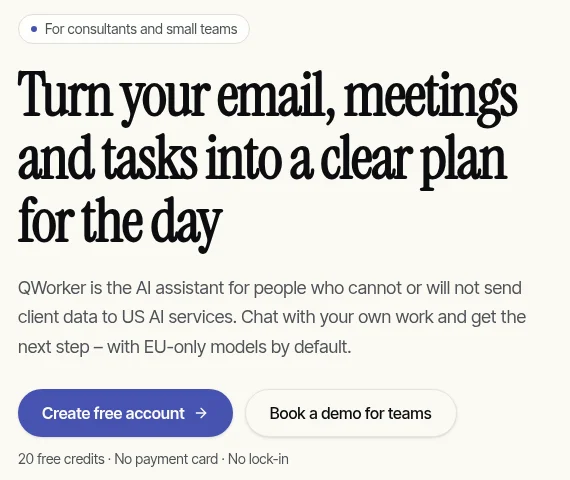
Our product overview brings together QWorker, meetnotes, skole.bot, TedBid and MemoryRaven. Follow the relevant product link and read its own terms. An existing product may be a useful starting point, while a particular workflow may need adaptation. We discuss that distinction before you invest in a larger implementation.
Make data requirements part of the choice
An AI solution must suit the information it can access. Specify who will use it, which documents it may read and whether processing must take place in Denmark or the EU. The location of the interface alone does not tell you where models, logs or subprocessors handle information. Storage and processing are separate questions.
We review these requirements with you. A system using external models needs a different assessment from one using a restricted local model. Only use information approved for the purpose, and make a person responsible for checking the output before it becomes a decision. This applies even when an answer sounds confident.
Move from a trial to a working service
Define one workflow and agree what a useful result looks like. Test it with representative, approved examples. Look at the quality of the answers and whether colleagues can actually use them. Only then decide whether to extend the service to other teams or connect additional sources of information.
In a 30-minute meeting, you can explain the task, your current systems and the constraints that matter most. We discuss whether the next step is an existing product, a trial or advisory work. You do not need a completed specification to book a conversation about the right starting point.